Tennis Court

1. Design and Planning

  • Court type is selected: Clay, hard court (acrylic), grass court, artificial grass court.
  • Dimensions are determined:
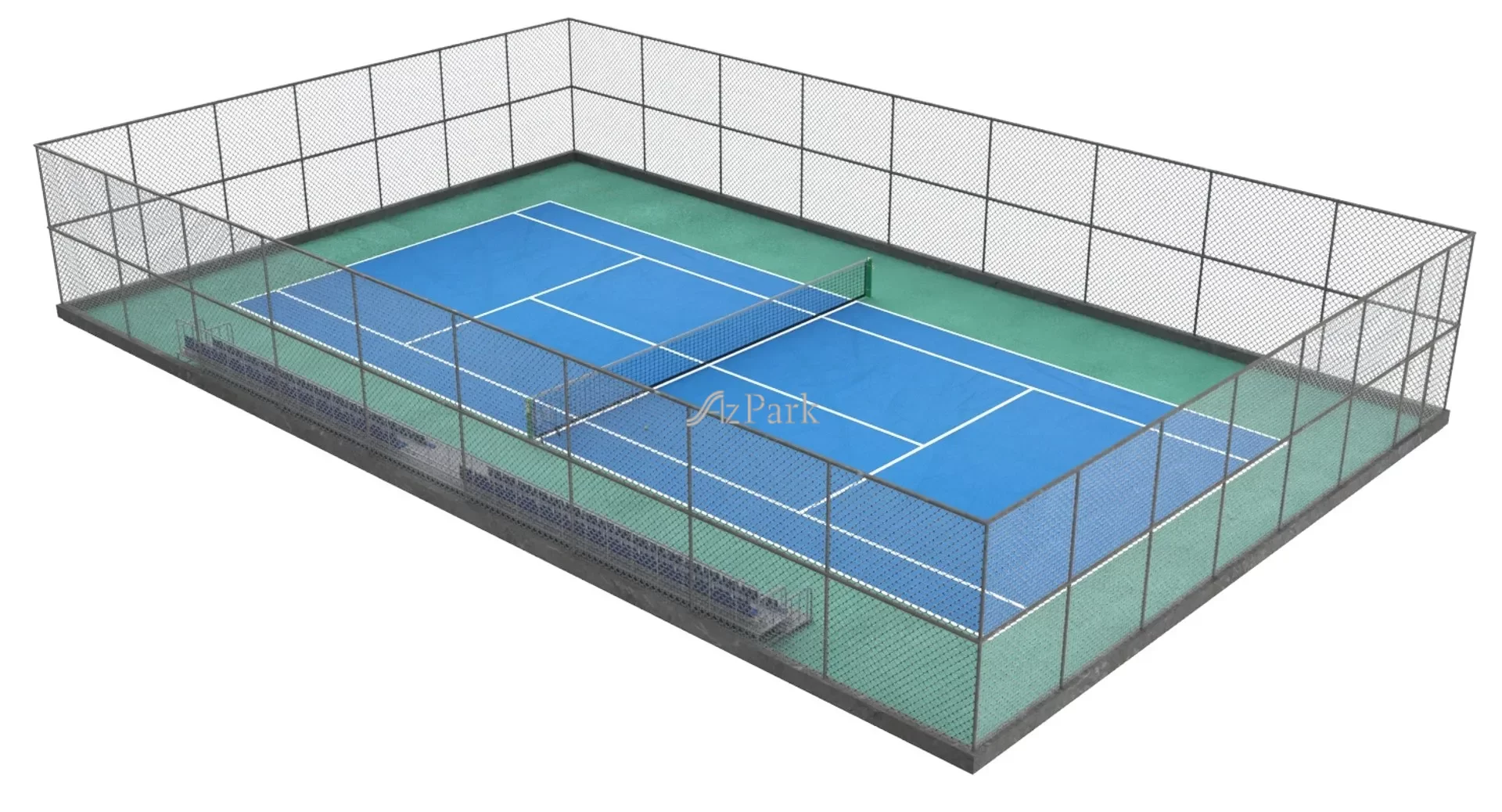
    • Standard play area: 23.77 m x 10.97 m (for doubles).
    • Total area (with safety zone): approximately 36.6 m x 18.3 m.
  • Purpose of use: Professional, practice, recreational, etc.


2. Site Preparation

  • Site is cleaned, soil is compacted.
  • Slope is provided (0.5-1% slope) — for water drainage.
  • Drainage system is constructed (especially important for outdoor courts).


3. Foundation and Ground Construction

Varies depending on ground selection:

Court type

Foundation

Top layer

Hard court (acrylic)

Concrete/asphalt (10-15 cm thickness)

Acrylic layer (3-5 coats)

Clay court (clay)

Compacted soil in layers

Special red clay covering

Grass court (grass)

Naturally well-drained soil

Natural grass (requires regular maintenance)

Synthetic grass court

Concrete/asphalt base

Synthetic grass (40–50 mm height)


4. Surfacing and Coloring

  • Hard courtsFor:
    • A primer coat is applied.
    • Elastic base layer.
    • 2–3 coats of acrylic paint.
    • Court lines are drawn in white or contrasting color.
  • On clay courts:
    • A clay layer is spread, leveled, and humidity is regulated.
  • On synthetic grass courts:
    • Synthetic grass rolls are laid, filled with sand and rubber granules.


5. Equipment Installation

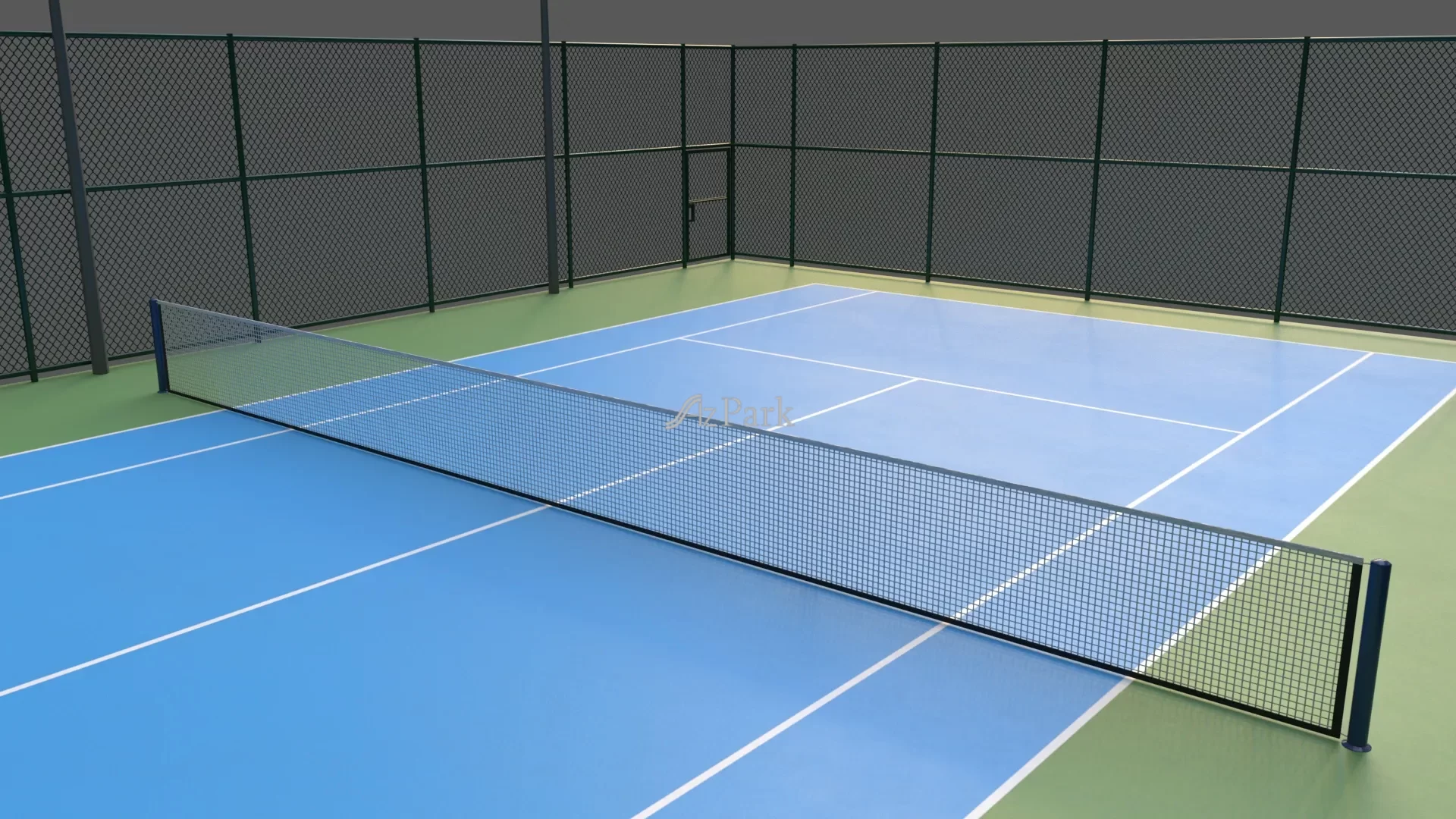
  • Tennis net and posts are installed with standard dimensions.
  • Umpire's chair, seating areas and protective fencing is built as desired.


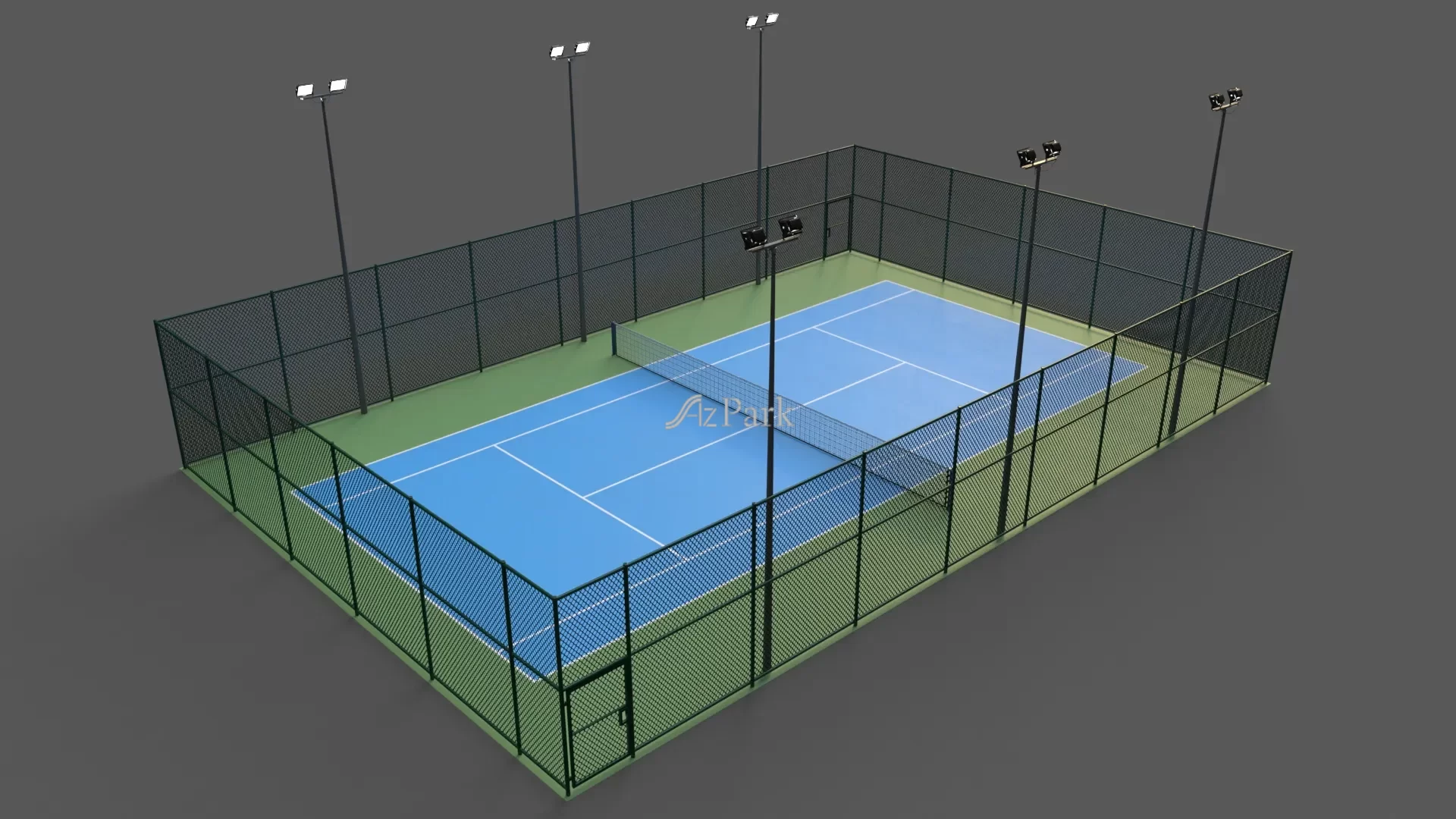
6. Lighting and Additional Workr

  • 6–8 LED projectors for open court.
  • Irrigation system (especially for clay courts).
  • Stands (in large projects).


7. Main Technical Characteristics

  • Concrete base: B30 grade concrete (or equivalent asphalt layer).
  • Acrylic layer thickness: 2–3 mm.
  • Court line width: 5 cm.
  • Net height: At the center 0.914 m, near the posts 1.07 m.