1. Design and Planning
- Dimensions:
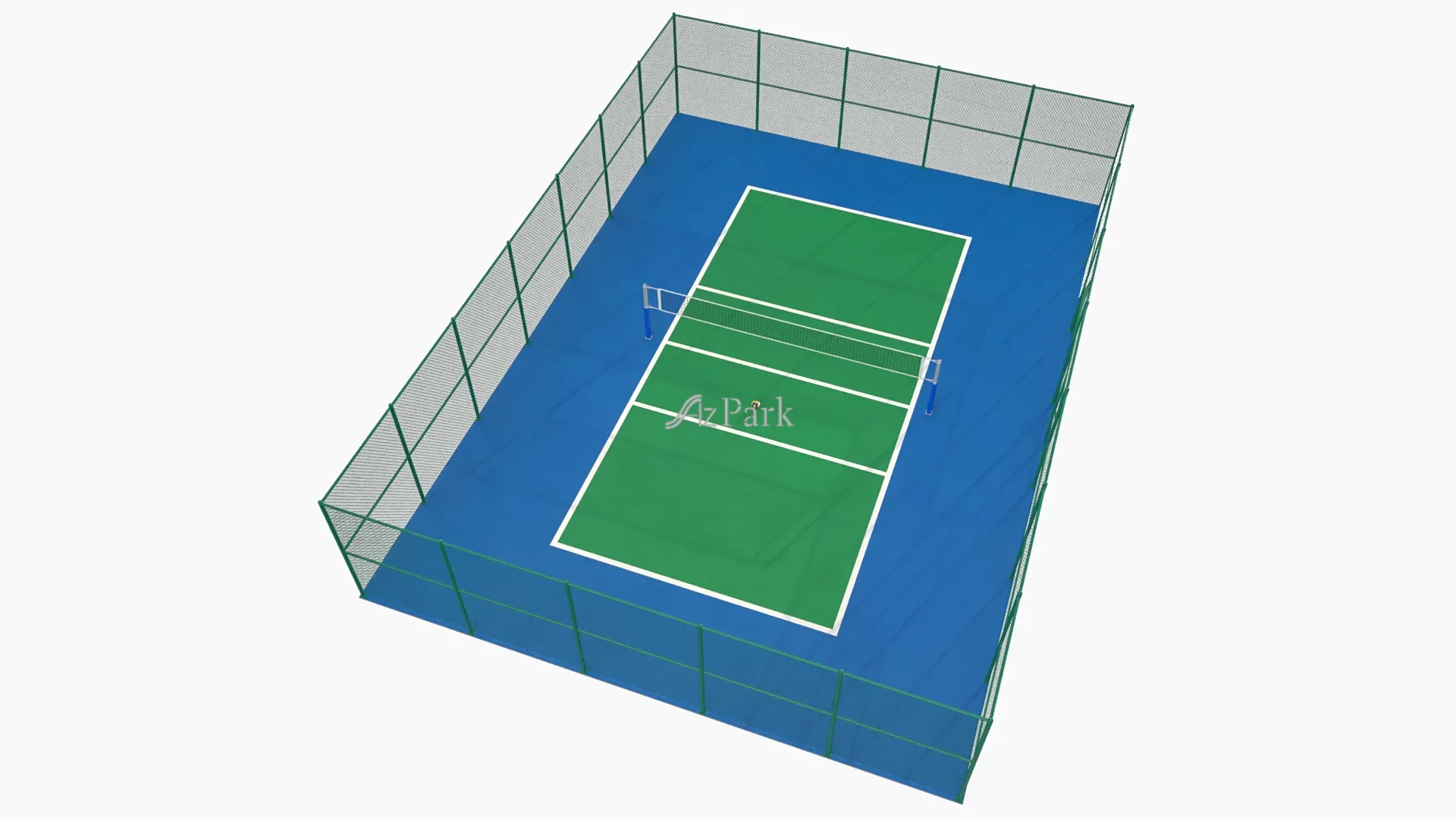
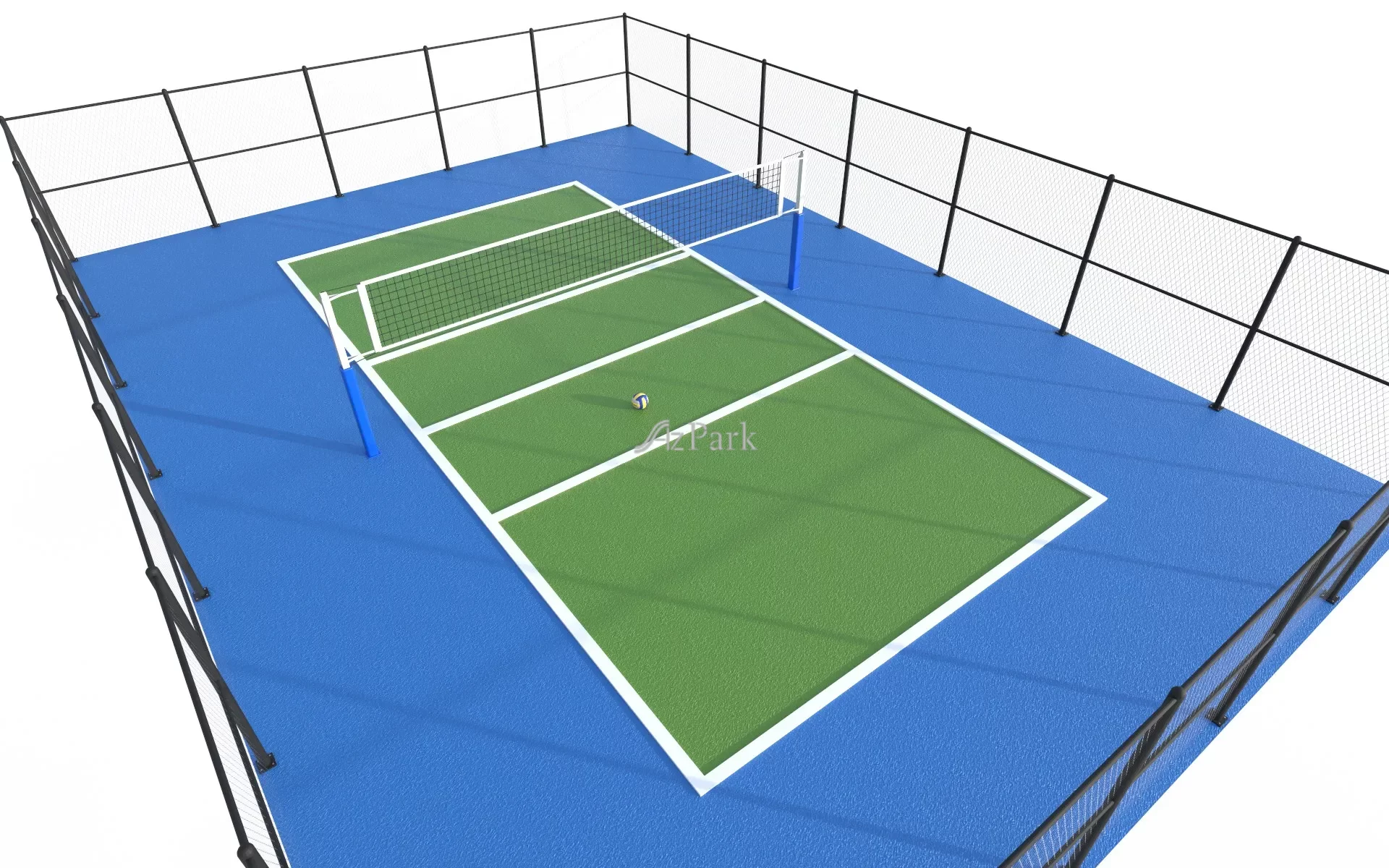
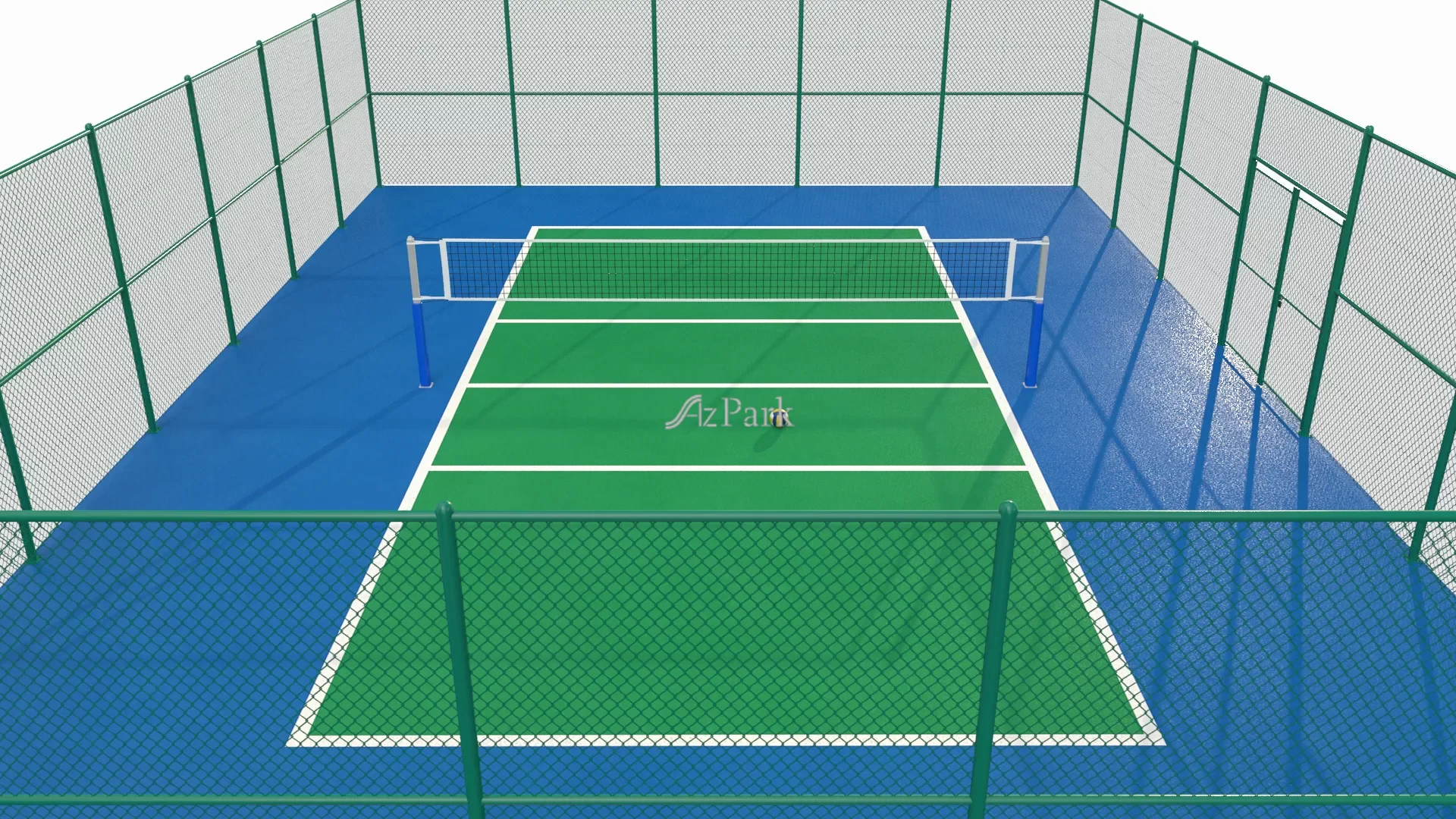
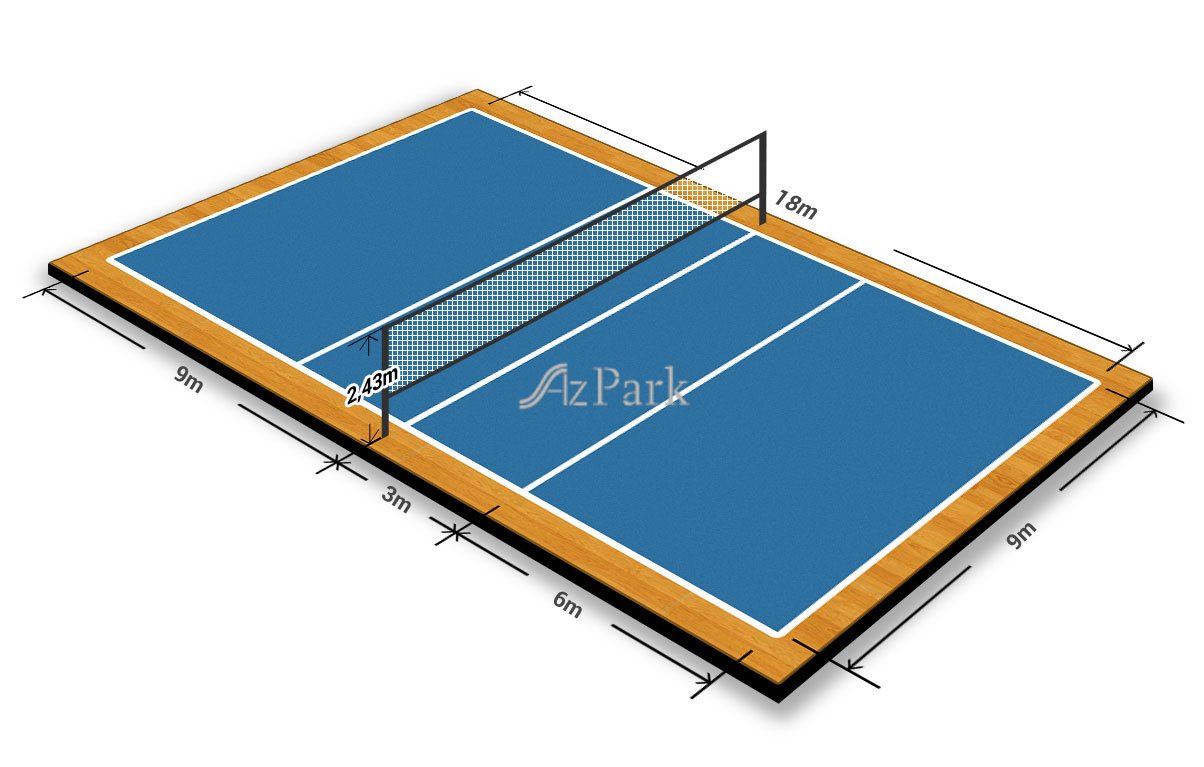
- Playing area: 18 m x 9 m (international standard).
- With safety zone: minimum 30 m x 19 m area is recommended.
- Use purpose is determined:
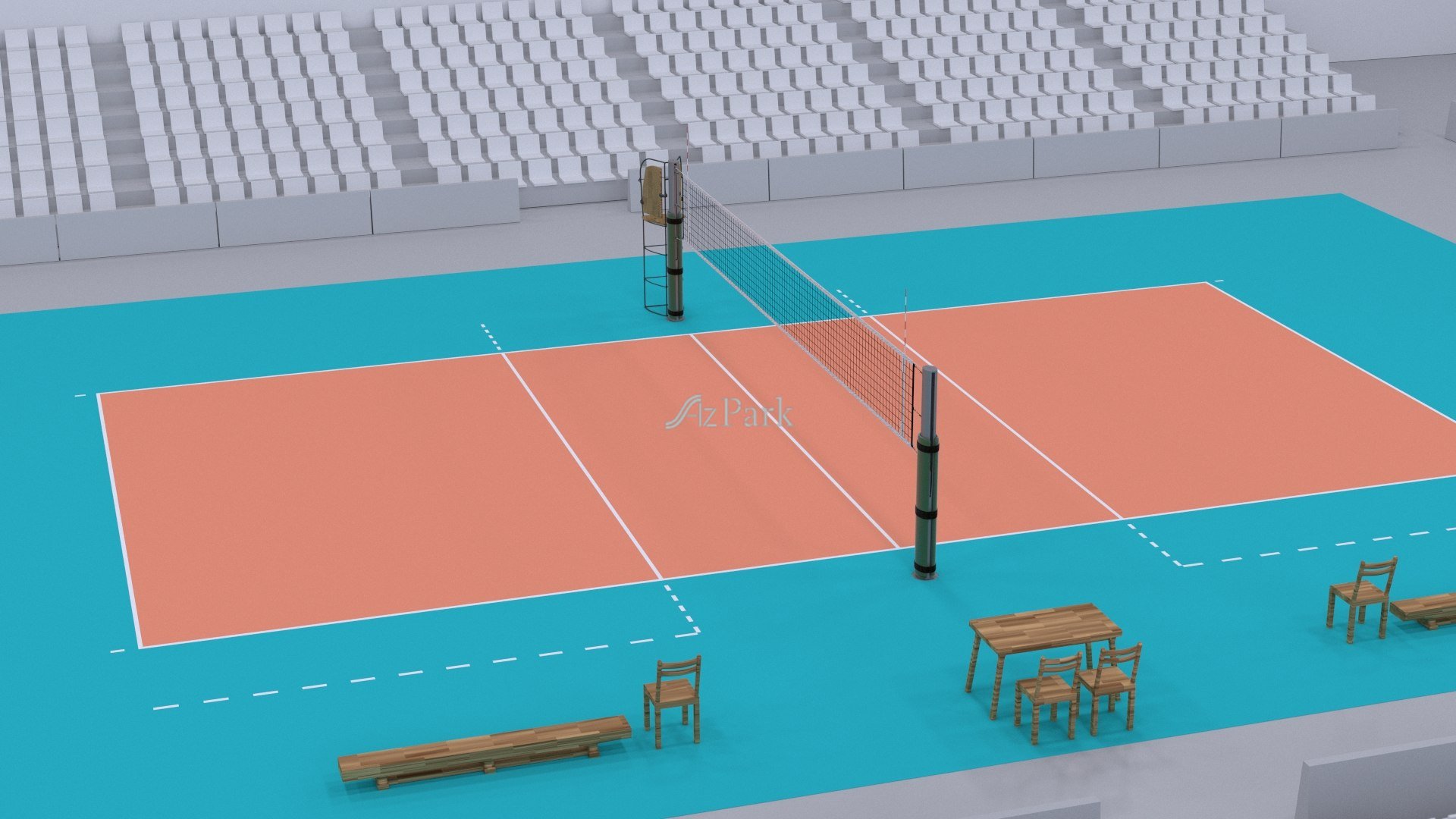
- Indoor hall (Indoor Volleyball)
- Beach volleyball (Beach Volleyball)
2. Site Preparation
- Cleaning and leveling of the field.
- Soil compaction.
- Slope provision (0.5% for water flow).
- Installation of drainage system (especially important for outdoor courts).
3. Foundation and Ground Construction
Differs based on type of use:
Court type | Foundation | Top layer |
Closed Volleyball Court | Concrete/asphalt base (10–15 cm) | PVC, PU, or wooden flooring |
Beach Volleyball | Drained soil base | 40–50 cm clean sand layer |
4. Surfacing and Coloring
- For closed courts:
- Primer and elastic base layers are applied.
- PVC or PU elastic covering is laid.
- Lines are drawn with special paint or tape (line width 5 cm).
- For beach volleyball:
- 40–50 cm of clean, soft sand is laid.
- A drainage layer (for example, gravel) is placed under the sand.
5. Equipment Installation
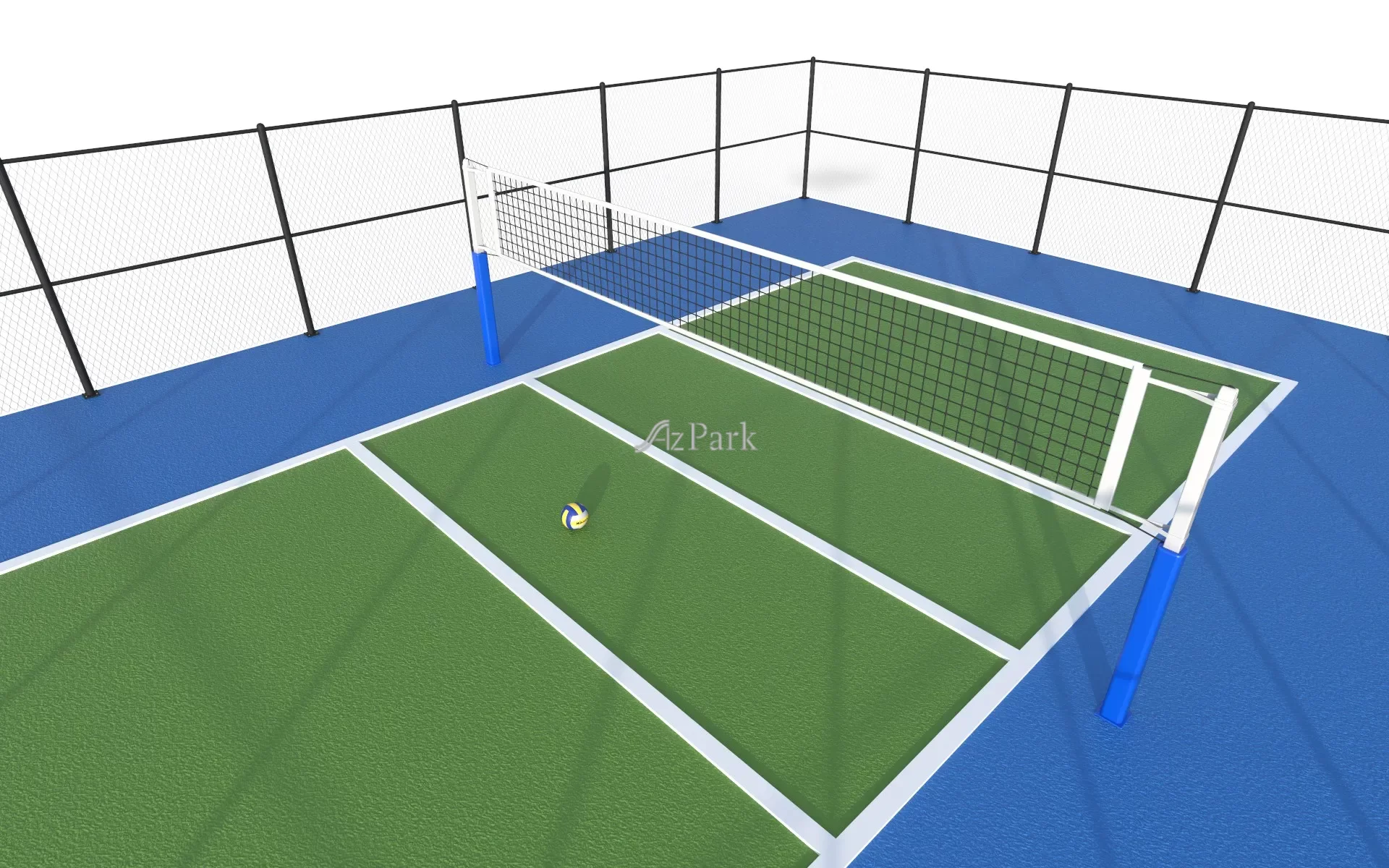
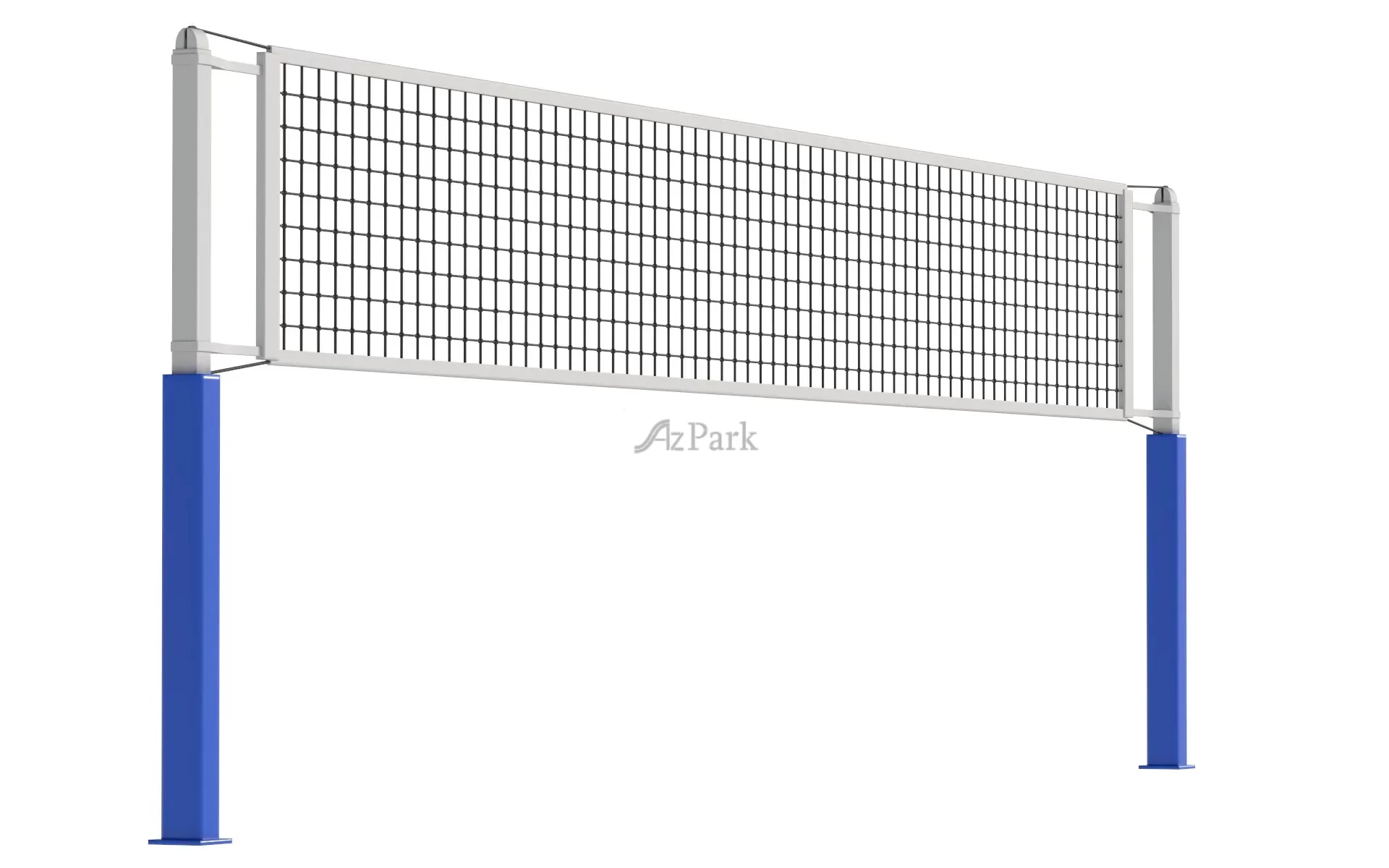
- Volleyball net and posts are installed.
- Posts must be fixed-based and meet FIVB standards.
6. Lighting and Additional Infrastructure
- LED sports lights for the closed hall.
- Weather-resistant projectors for outdoor courts (4–6 units).
- Stands and safety railings are added as desired.
7. Additional Technical Characteristics
- Concrete base: B25-B30 grade concrete (for closed courts).
- Drainage system: 10–20 cm gravel layer + drainage pipes for outdoor courts.
- Net height:
- Line color: Contrasting white, yellow or red (for various visibility conditions).